Search Everywhere Optimization (S.E.O. 2.0)
(1) Question: Why must marketers look beyond Google?
Answer: AI models learn from Reddit, TikTok, and LinkedIn; if you aren’t there, the AI won’t “know” you exist.
(2) Question: What is “Social Sentiment Tracking”?
Answer: Monitoring how people talk about your brand on social media, as this heavily influences AI recommendations.
(3) Question: How does TikTok influence AI search?
Answer: AI models use viral trends and video transcripts to understand what is currently popular and “true” in the real world.
(4) Question: What is a “Brand Footprint”?
Answer: The total sum of your brand’s presence across all digital platforms, which AI uses to determine your authority.
For two decades, the term “SEO” meant one thing: ranking on Google. Businesses poured time and money into getting their websites to appear higher in search results. That worked when people only searched one way: by typing words into a search box.
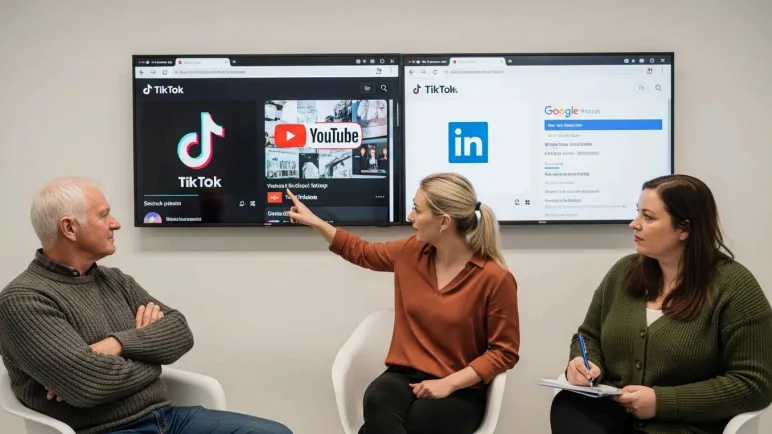
Now, search has moved far beyond Google. People discover businesses on TikTok, YouTube, LinkedIn, Instagram, and even inside AI chat tools. They’re not just reading web pages anymore; they’re watching, listening, and scrolling. Search has become multi-platform and deeply influenced by personal habits, recommendations, and visual content.
To stay visible, small businesses need a new mindset: Search Everywhere Optimization (S.E.O. 2.0) , a strategy that ensures your business can be found wherever people search, not just on Google.
Customers are already searching differently. The question is, will they still find you?
Why Multi-Platform Search Optimization Matters
People’s online habits have changed dramatically. Younger audiences often use TikTok or YouTube as their primary search tools. Professionals search within LinkedIn. AI assistants pull answers from multiple platforms at once. If your content only lives on your website, you’re missing entire audiences who may never visit Google.

Common shifts in search behaviour include:
Short videos and social posts are replacing long web searches.
People are searching for “how-to” answers directly on YouTube.
Users are trusting influencer recommendations more than search ads.
LinkedIn is becoming the go-to search platform for business advice.
AI chat tools summarise results without linking to traditional sites.
Google is still important, but it’s no longer the only gateway. Visibility now depends on how well your brand appears across every major discovery platform.
When customers see your name multiple times in different contexts, a TikTok clip, a YouTube tutorial, a LinkedIn post, it reinforces trust and awareness before they even visit your site.
How to Optimise for TikTok SEO and Short-Form Discovery
TikTok has become one of the world’s most popular search platforms, especially among younger users. People don’t just watch videos there; they actively search for tutorials, recommendations, and reviews.
For small businesses, TikTok SEO is about combining storytelling with visibility. The platform’s algorithm rewards authenticity and engagement over polish or production quality.
Tips for TikTok search visibility:
Use relevant keywords in your video captions and on-screen text.
Add searchable hashtags that match how users might ask a question.
Speak your keywords naturally; TikTok’s system can detect words spoken in the video.
Post short, helpful videos that answer real questions (“How to fix…,” “Best tips for…,” etc.).
Keep your profile bio descriptive and keyword-friendly.
When people find your videos helpful or relatable, they share them widely, turning your content into a living form of word-of-mouth marketing.
A single short video can often outperform months of blog posts when it comes to reach and brand recognition.
YouTube Search Optimization for Small Businesses
YouTube is still the second-largest search engine in the world, but its content now plays a much bigger role in overall brand visibility. YouTube videos often appear directly in Google results, giving you two opportunities for exposure in one.

Key ways to improve YouTube SEO:
Use keyword-rich titles that match natural questions people ask.
Add clear, detailed descriptions; YouTube reads them for search context.
Include spoken keywords early in your video script.
Use custom thumbnails with readable text to boost click-throughs.
Organise videos into playlists to increase watch time and relevance.
YouTube isn’t just a place for entertainment; it’s where people go to learn, research, and compare. For small businesses, posting consistent educational or behind-the-scenes videos builds both trust and authority.
When your content helps people solve real problems, you stop competing for clicks and start earning attention naturally.
LinkedIn SEO and Professional Discovery
LinkedIn has quietly become one of the most powerful search engines for B2B and service-based businesses. Professionals use it to find experts, suppliers, and thought leaders. Optimising your presence there is no longer optional; it’s essential.

Strategies for better LinkedIn visibility:
Use relevant industry keywords in your profile headline and “About” section.
Post regularly with insights, case studies, or helpful advice.
Engage in conversations through comments; LinkedIn rewards active participation.
Optimise your company page with detailed descriptions and specialities.
Encourage staff members to share company updates to expand reach.
LinkedIn’s algorithm prioritises authentic discussion and expertise. The more your business contributes useful insights, the more your brand shows up in search results within the platform, and in AI-generated summaries that pull LinkedIn data.
LinkedIn SEO is about showing credibility, not just visibility.
Building a Unified Search Everywhere Strategy
Managing content across multiple platforms can feel overwhelming, but it’s easier when you treat each platform as part of one ecosystem. The goal is to make sure your brand message and search visibility remain consistent wherever people discover you.
Simple ways to build a “Search Everywhere” system:
Reuse content in platform-specific formats (turn a blog into a video or carousel post).
Use consistent branding and keyword themes across all platforms.
Track which channels drive real engagement, not just clicks.
Link between platforms, for example, add YouTube links to LinkedIn posts.
Keep your brand voice natural, not robotic or sales-driven.
Search Everywhere Optimization isn’t about being everywhere at once; it’s about showing up meaningfully wherever your audience already is.
The more places your brand shows up with value, the easier it becomes for customers to remember and trust you.
Final Thoughts
Search visibility is no longer confined to Google. TikTok, YouTube, and LinkedIn have become discovery engines in their own right, shaping how people research, compare, and decide. Customers now search across platforms based on intent, format, and context, not just keywords.
Businesses that optimise for only one channel are effectively invisible in large parts of the buying journey. The competitive gap is no longer about who ranks highest, but who shows up consistently wherever attention flows.
We help UK small businesses implement Search Everywhere Optimization systems:
Platform-specific content designed for discovery, not repurposing
AI workflows that adapt messaging across video, social, and search
Consistent brand signals that reinforce trust across platforms
Automated distribution that scales presence without manual overload
Schedule your free AI marketing audit. We analyse where and how your brand currently appears across Google, TikTok, YouTube, and LinkedIn, identify immediate visibility gaps, and show which AI-driven systems can unify your presence under S.E.O. 2.0.
Let’s talk.
Visit Our Other Blogs
Zero-Click Revenue: Turning AI Citations into Conversions
🚀 Want more high-impact guides like this? Stay tuned for next week’s edition where we dive further into the [topic]. Subscribe now and stay on top of the automation world.